

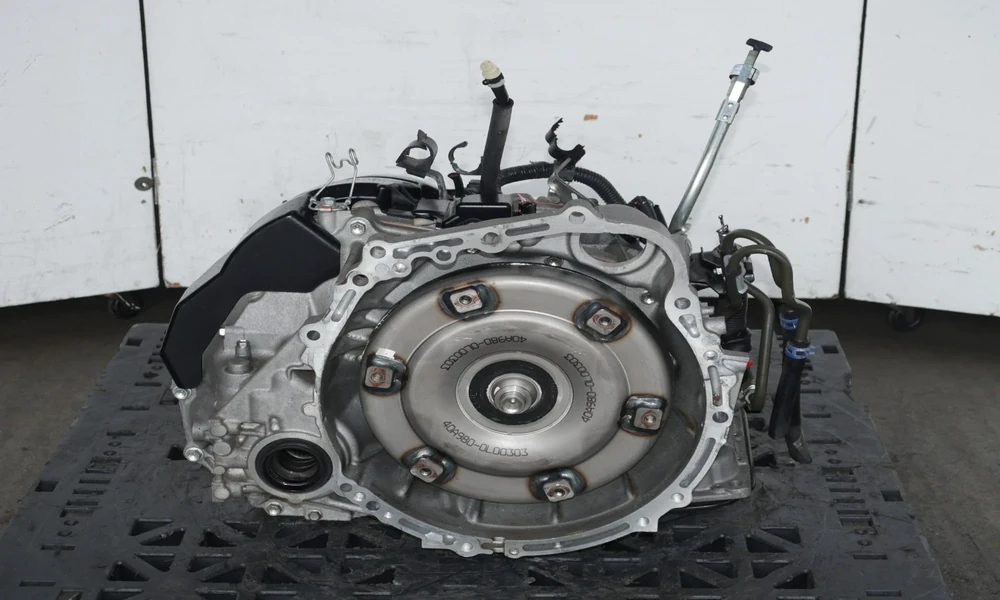
Picture the owner of a 2005 Camry whose automatic has started slipping in third gear. The car is otherwise solid, the body is clean, and the idea of scrapping it over a gearbox feels absurd. This is the exact situation where imported Toyota transmissions have carved out a permanent role, and it is worth understanding why they, more than almost any other used driveline part, tend to be a safe bet.
Toyota’s reputation for durability is not marketing. It is the accumulated result of conservative engineering, generous tolerances, and a corporate allergy to fixing what is not broken. Those same traits show up in the transmissions, which is why a used one pulled from a low-mileage Japan-market car so often outlasts the rest of the vehicle it goes into.
Why the used Toyota gearbox market is so deep
Two forces feed the supply. First, Toyota built enormous volumes of a relatively small number of transmission designs, so a single family covers many models and years. Second, Japan’s shaken inspection regime retires cars early, releasing gearboxes with modest mileage into the export stream. The combination means that for the common Corolla, Camry, and RAV4 platforms, finding a matching unit is rarely the hard part. Sellers who specialize in this, including catalogs of JDM Toyota transmissions, tend to carry multiple options per chassis precisely because the donor supply is so consistent.
That depth matters to a buyer. When several units exist for your car, you can shop on mileage, warranty, and price rather than taking whatever single gearbox happens to exist. Scarcity forces compromises. Toyota’s volume mostly spares you from them.
Automatic or manual, the split still matters
The imported Toyota world divides cleanly. On the automatic side, the workhorse families powered a huge share of the Camry, Corolla, and Highlander lineup for years, and they are known for taking abuse and continuing to shift. The failure modes are usually predictable, related to fluid neglect rather than design flaws, which is part of why a clean used unit is such a reasonable gamble.
On the manual side, the enthusiast crowd keeps demand high. The gearboxes behind the Celica, the Corolla’s sportier trims, and the rear-drive icons remain sought after for swaps, and a Japan-market example often arrives in better shape than a domestic one that lived a harder life. Whether you are keeping a daily driver alive or feeding a project, the manual supply runs parallel to the automatic one.
There is a third category worth knowing about, the transmissions attached to Toyota’s truck and SUV lineup. The 4Runner, Tacoma, and Highlander drivetrains have their own dedicated following, and the imported units serve owners keeping capable, long-lived trucks on the road. These tend to be heavier-duty designs built for load and low-range work, so matching one correctly matters even more than on a light car. The same durability reputation applies, and the same supply logic feeds the market. For an owner nursing a two-decade-old truck that still works hard, a low-mileage imported gearbox can be the difference between another ten years of service and an early trip to the scrap yard.
The fitment details that trip people up
A transmission that fits the make is not the same as a transmission that fits your car. Toyota used different bellhousing patterns, gear ratios, and electronic controls across the range, and the differences are easy to overlook. A gearbox from a front-drive economy chassis will not bolt to a rear-drive platform no matter how similar the badge looks. Even within a model line, a facelift year can bring a revised transmission code.
So the rule is the same one that governs every used driveline purchase: match the code, not the marketing. Confirm the transmission designation against your vehicle’s requirements, check whether your car expects a specific ratio, and verify that any electronic control on the unit speaks the same language as your engine management. Toyota owners have documented these pairings exhaustively, and a short search of a model-specific forum usually resolves the question in minutes.
The maintenance that decides its second life
A used Toyota transmission arrives with a clean slate, and how long that slate stays clean is mostly up to the installer. The single most important habit is fluid discipline. Toyota automatics are sensitive to the correct fluid specification, and using the wrong type or letting it degrade is the fastest route to the same failure that retired the last one. Fill it with the exact fluid Toyota calls for, not a universal substitute that claims to cover everything, and set a realistic change interval rather than treating the fluid as lifetime.
Cooling matters almost as much. Heat is the enemy of any automatic, and a transmission that runs cool lasts dramatically longer than one that cooks in traffic. If the car sees towing, hot climates, or heavy stop-and-go use, an auxiliary cooler is cheap insurance on an otherwise healthy unit. The goal is to give the imported gearbox easier conditions than the ones that ended its predecessor’s life.
On the manual side, the equation is simpler but not zero. Fresh gear oil of the correct weight, a clutch replaced during the swap while the gearbox is already out, and attention to the shifter linkage all help the imported unit feel and last like new. Reusing a worn clutch on a fresh transmission is the classic false economy, and it is easy to avoid when the two are apart on the bench anyway. Treat the second life better than the first and a used Toyota gearbox will reward the effort.
Where a used Toyota gearbox makes the most sense
The strongest case is exactly the slipping-Camry scenario. A high-mileage but otherwise sound Toyota, a failed or failing transmission, and a body that has plenty of life left. Against a rebuild quote or a remanufactured unit, a low-mileage imported gearbox frequently wins on both price and lead time, and the inherent durability of the design stacks the odds in your favor.
It also makes sense for the enthusiast keeping a rear-drive Toyota or a Celica on the road, where the specific manual gearbox is part of the car’s character and a fresh import beats a worn-out domestic core. In both cases the appeal is the same: Toyota engineered these to run a long time, Japan’s inspection cycle keeps releasing barely-used examples, and the result is a used part that behaves more like a new one than most of the market. Match the code, buy from a seller who documents mileage and stands behind the unit, and a JDM Toyota transmission tends to become the least dramatic part of the whole repair, which, for a transmission, is exactly the point.