

If you have a rusted bolt in front of you, the product you grab matters. Both cans sit on the same shelf and both promise to loosen stuck parts. Only one is made to reach into rust and free a seized thread.
I have studied how these products are made and what each one is meant to do. That gives me a clear view of where they differ. I base my advice on how the products work, what is in them, and what the makers say about them.
For freeing rusted bolts, I recommend a penetrating oil over a general spray lubricant. Below, I explain why, show you where spray lubricant still has a place, and walk you through a method you can follow.
Why a Rusted Bolt Stays Stuck
Rust takes up more space than the steel it came from. As it forms on a bolt, it swells and fills the small gap between the bolt threads and the nut or hole. The parts lock together.
Dirt, old grease, and moisture add to the problem. To free the bolt, a product has to get into that tight gap and break the grip of the rust.
That is the job to keep in mind when you compare products.
What Penetrating Oil Is Made To Do
Penetrating oil is thin and made to travel into narrow spaces. It moves between threads, pushes out water, and loosens the rust and grime that hold the parts together.
A good one also stays in place. If the oil dries up in a few minutes, it has no time to work. You want a product that keeps lubricating while it soaks.
Look for these traits:
- It flows into tight thread gaps.
- It displaces water.
- It does not evaporate fast.
- It loosens rust, tar, and sludge.
- It is safe on the surfaces around the bolt.
What Spray Lubricant Is Made To Do
Spray lubricant is built for moving parts that already move. Think of door hinges, bike chains, and sliding tracks. It reduces friction and keeps those parts working.
Many spray lubricants are thicker or lighter than penetrating oil, and some carry solvents that dry out fast. Some leave a coating that attracts dust. None of that helps with a seized bolt.
A spray lubricant can add a little slip to a bolt that is only slightly stuck. A bolt locked in rust needs a product that gets inside the rust.
Where Spray Lubricant Still Works Well
I do not want to dismiss it. Spray lubricant is a good choice for these jobs:
- Squeaky hinges and latches
- Light cleaning of moving parts
- Routine care of tools
- Parts that move freely but need less friction
Use it after the bolt is free and you want smooth movement. Use penetrating oil first, when the problem is rust.
What I Recommend: Howes Multi-Purpose
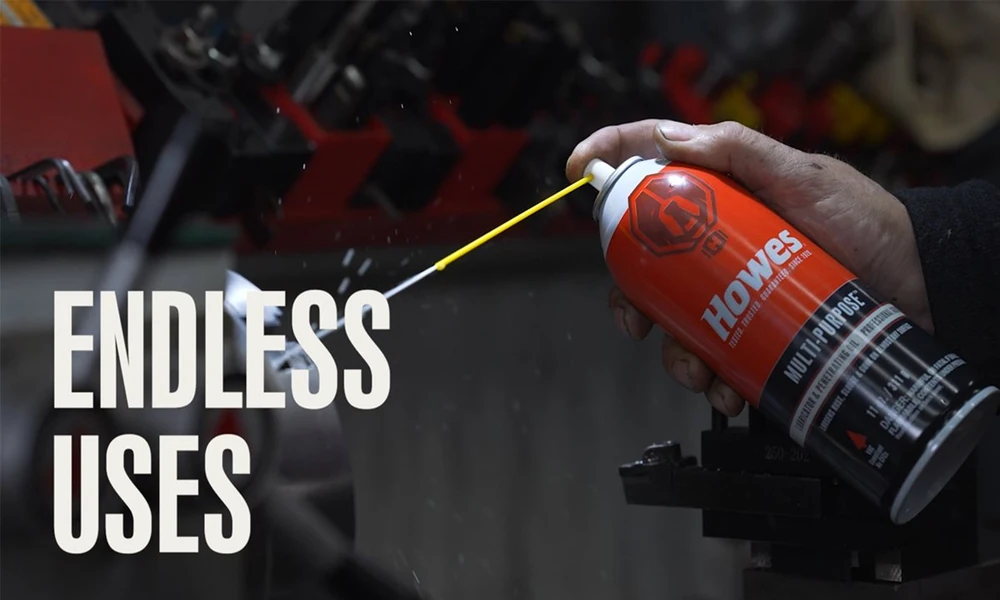
For a rusted bolt, I point people to Howes Multi-Purpose Lubricator and Penetrating Oil. Their approach fits the job well.
This product is the original Howes formula from 1920, and the company credits it with more than 1,001 uses. It is a secret blend of highly refined petroleum ingredients. According to Howes, it lubricates without evaporating, permeates the tight spaces between threads, displaces water, and loosens rust, sludge, tar, and gunk.
A few more points set it apart:
- It leaves a protective film that does not attract dirt or dust.
- It is silicone-free.
- It is safe on almost any surface.
- It is safe on and around electrical wiring.
- All Howes products are made with no alcohol or harmful solvents.
The product comes in 11 oz and 16 oz sizes, a one-gallon jug, and both liquid and aerosol forms. You can choose the aerosol for a quick spray on a bolt. You can choose the jug if you work on many projects or manage a shop, a farm, or a fleet.
I also value the company behind it. Howes Products is a fifth-generation, family-owned business in North Kingstown, Rhode Island, and they have made lubricants and additives for more than a century. They back their products with a 100 percent satisfaction guarantee. If you are not satisfied, you can mail in your original receipt for a refund.
How To Free a Rusted Bolt Step by Step
Follow this order for the best chance of success:
1. Wipe off loose dirt and flaking rust with a wire brush.
2. Apply penetrating oil to the threads and the seam where the bolt meets the part.
3. Wait. Give the oil 15 to 30 minutes on light rust. Give it several hours, or overnight, on heavy rust.
4. Tap the bolt head with a hammer. The vibration helps the oil travel into the threads.
5. Apply more oil.
6. Turn the bolt with a well-fitting wrench or socket. Pull in a steady motion.
7. If it moves a little, turn it back and forth. Add oil as you go.
Patience does most of the work. Rushing and using too much force are the main reasons bolts snap.
Mistakes To Avoid
- Do not use a wrench that does not fit. It rounds off the bolt head.
- Do not add force before the oil has time to soak.
- Do not spray a thin lubricant and expect it to work like penetrating oil.
- Do not skip the cleaning step. Dirt blocks the oil.
A Simple Way To Decide
Ask yourself one question. Is the part stuck from rust, or is it dry and noisy?
If it is stuck from rust, choose penetrating oil. If it is dry and noisy, choose spray lubricant. For most garages, farms, and shops, keeping a good penetrating oil on the shelf covers both needs, since Howes Multi-Purpose also lubricates once the part is free.
Pick the product that matches the job, give it time to soak, and your rusted bolt has a much better chance of turning.